
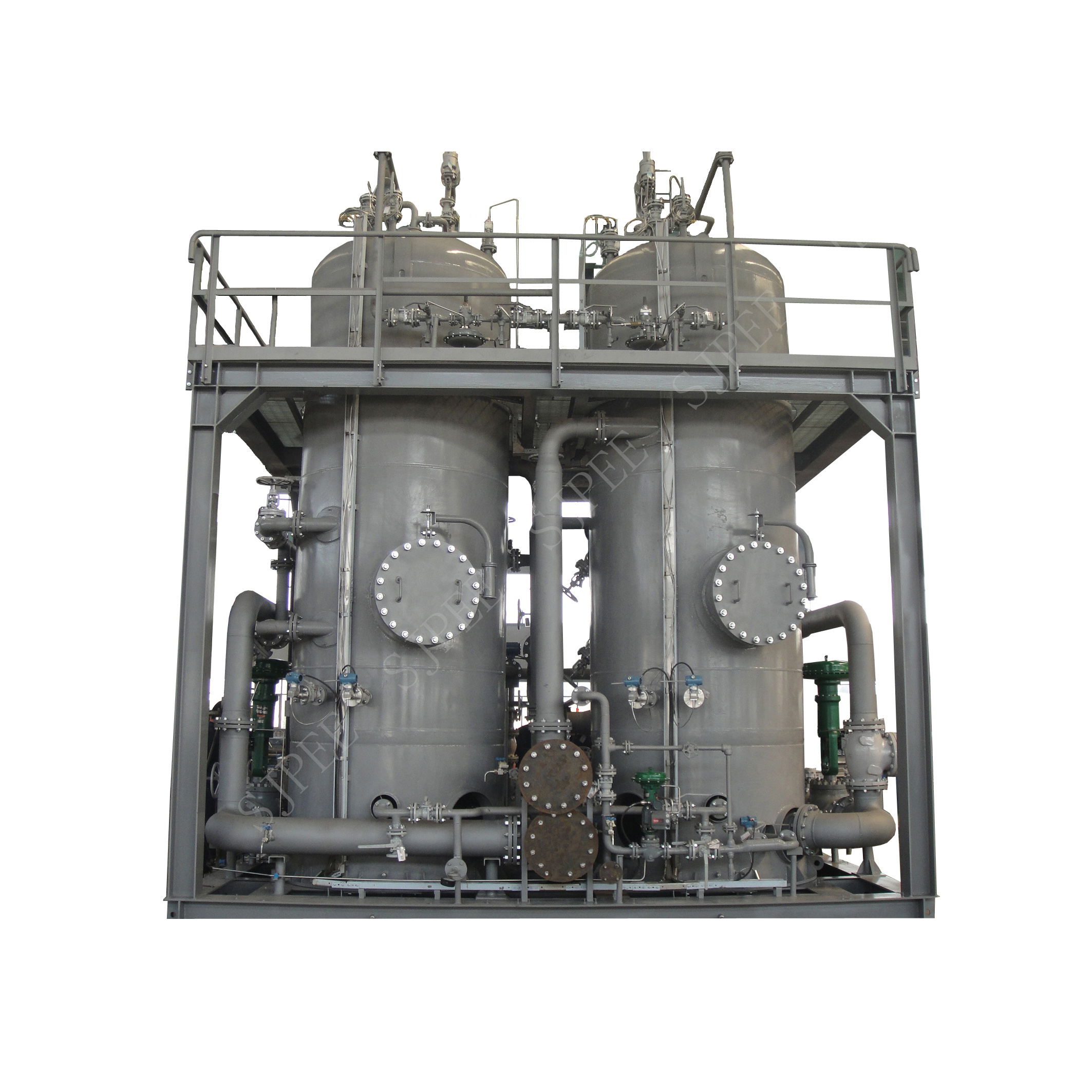
In the ever-evolving oil and gas industry, the efficient separation of water from well streams remains a critical challenge. Addressing this challenge, a leading company dedicated to the development of advanced separation and filtration equipment has recently introduced significant improvements in well stream dewatering technology. These advancements not only enhance operational efficiency but also contribute to sustainability efforts by optimizing water management in hydrocarbon production processes.
### Commitment to Innovation in Separation Equipment
The company, with a long-standing commitment to innovation, specializes in designing and manufacturing a variety of separation and filtration equipment tailored for oil and gas applications. Continuous research and development have been key drivers behind their ability to deliver cutting-edge solutions that meet the demanding requirements of upstream production environments.
At the core of the company’s technology portfolio are cyclone separators, devices that use centrifugal force to separate fluids of differing densities. Their expertise in cyclone technology has been instrumental in improving well stream dewatering—a process essential for removing water from the mixture of oil, gas, and water produced from underground reservoirs.
### The Importance of Well Stream Dewatering
Well stream dewatering is a crucial initial step in hydrocarbon processing. The presence of water in production wells complicates downstream operations, increases transportation costs, and can accelerate corrosion in pipelines and equipment. Effective dewatering reduces these risks and enables more efficient handling and processing of oil and gas.
Traditional methods of separation, while effective to some extent, often face limitations in terms of throughput capacity, separation efficiency, and maintenance demands. This has motivated ongoing efforts to enhance the performance and reliability of dewatering systems, thereby improving overall production economics.
### Innovations in Dewatering Technology
The company’s latest advancements revolve around next-generation cyclone separators that deliver higher separation efficiencies and greater adaptability across varying well stream conditions. Key innovations include:
- **Enhanced Cyclone Design:** By refining the geometry of the cyclone, the new equipment achieves improved fluid dynamics, resulting in more effective separation of water from oil and gas phases. This leads to lower water content in the discharged hydrocarbons, which is vital for meeting quality specifications.
- **Advanced Materials and Coatings:** Utilizing corrosion-resistant materials and specialized surface coatings extends the lifespan of separators, especially in harsh environments where produced fluids may contain corrosive substances such as hydrogen sulfide or carbon dioxide.
- **Modularity and Scalability:** The equipment has been engineered with modular components, allowing operators to scale capacity or integrate the system easily into existing processing facilities. This flexibility helps accommodate fluctuating production rates without sacrificing performance.
- **Automation and Monitoring:** Incorporating sensors and control systems enables real-time monitoring of separation efficiency and equipment status. Automated adjustments optimize operation continuously, reducing the risk of process upsets and minimizing downtime.
### Operational and Environmental Benefits
The benefits of the improved well stream dewatering solutions extend beyond technical performance. Operators can expect reductions in operational costs due to lower energy consumption, decreased chemical usage, and minimized maintenance interventions. Additionally, improving the quality of the separated hydrocarbons facilitates smoother downstream processing and transportation logistics.
From an environmental perspective, efficient water removal reduces the volume of water that requires treatment or disposal, thereby lessening the environmental footprint of oil and gas operations. Enhanced separation technology thus supports regulatory compliance and sustainability goals, aligning with the broader industry shift toward more responsible resource management.
### Customer-Centric Approach
Understanding the diverse challenges faced by operators worldwide, the company offers customized solutions tailored to specific field conditions. Their engineering teams work closely with clients to optimize system design, ensuring compatibility with unique well stream compositions and production scenarios.
Moreover, comprehensive after-sales support—including training, maintenance services, and technical assistance—ensures that customers derive maximum value and reliability from their investment in dewatering equipment.
### Looking Ahead
As the oil and gas sector continues to navigate complex market dynamics and environmental considerations, advancements in separation technology like well stream dewatering will play an increasingly vital role. The company’s dedication to ongoing innovation and quality positions it as a key contributor to the industry's efforts to enhance efficiency and sustainability.
With continued focus on research, technological refinement, and customer collaboration, the company aims to advance the state-of-the-art in separation equipment, meeting evolving needs and setting new benchmarks for performance in oil and gas production.
---
**About the Company**
With years of experience in the field, the company is recognized for its development of high-quality separation and filtration solutions critical to the oil and gas industry. By continuously improving cyclone separation products and related technologies, it supports operators worldwide in achieving improved operational outcomes and environmental compliance.
---
In summary, the latest developments in well stream dewatering technology underscore the critical intersection of innovation, operational excellence, and environmental stewardship. Through superior separation equipment, the company continues to empower the oil and gas industry to optimize production processes while advancing sustainability objectives.