
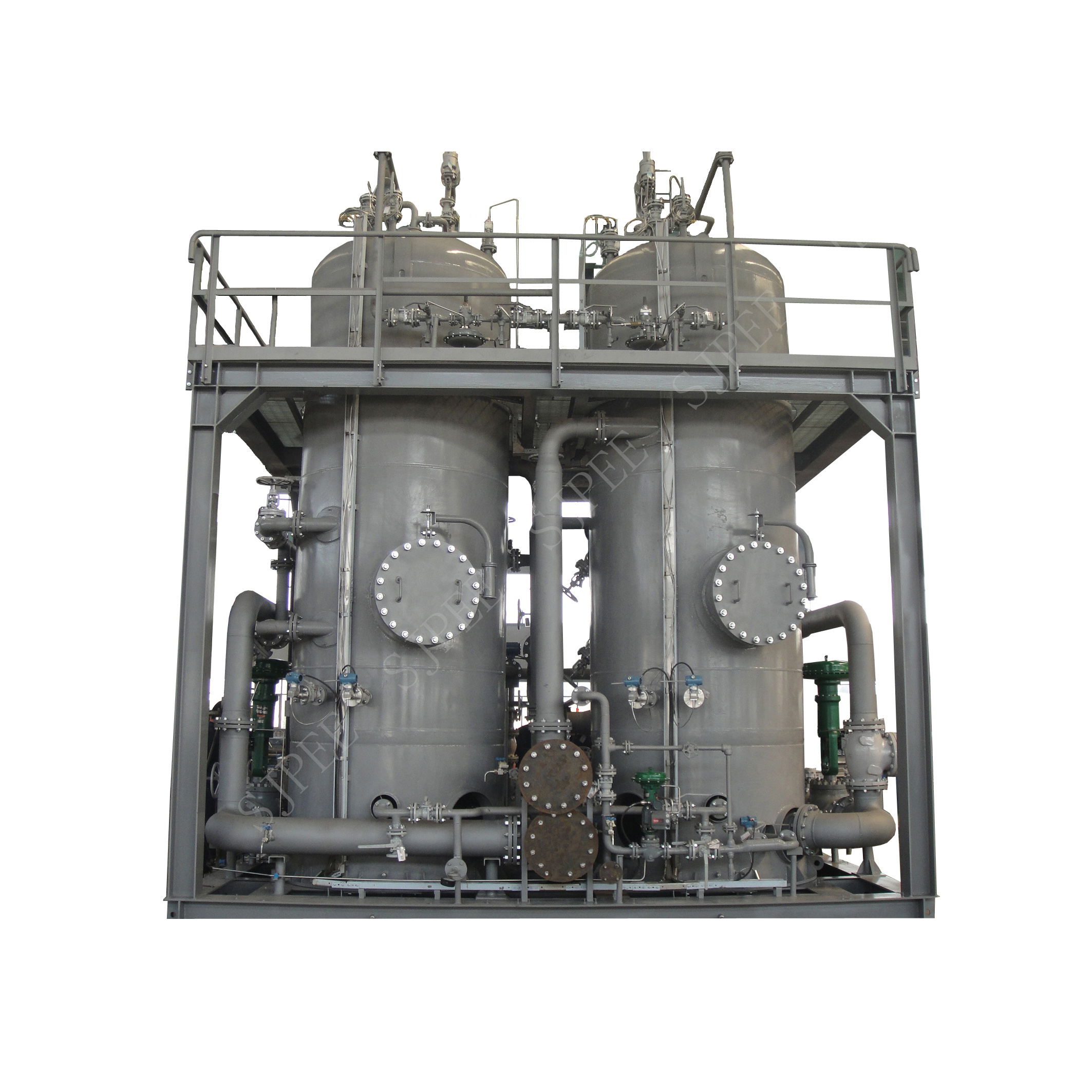
In today’s rapidly evolving oil and gas industry, the need for efficient separation and filtration technologies has never been greater. One of the key challenges operators face is the handling and removal of very fine particles that can adversely affect operational efficiency and equipment longevity. Addressing this critical issue, industry leaders have made significant strides in developing advanced separation equipment tailored specifically to tackle very fine particle filtration.
The company, a renowned name in the oil and gas sector, has long been at the forefront of this technological evolution. With a steadfast commitment to innovation, the company continuously develops and enhances various separation and filtration equipment designed to meet the rigorous demands of the industry. This focus on cutting-edge cyclone separation products and technologies underscores the company’s dedication to offering practical, effective solutions to complex filtration challenges.
### The Challenge of Very Fine Particles in Oil and Gas Operations
Very fine particles, often measuring less than 10 microns, present a particularly stubborn problem in oil and gas processing. These particles can originate from various sources such as drilling, production fluids, and refining activities. When left untreated, they can accumulate within processing equipment, pipelines, and turbines, leading to increased wear and tear, blockages, and reduced operational throughput.
Moreover, the environmental implications of inadequate fine particle management are significant. Disposal of untreated particulate matter can lead to soil and water contamination, posing regulatory and reputational risks to operators. Therefore, the oil and gas industry demands reliable, high-performance equipment that not only effectively removes these particles but also integrates seamlessly into existing operations without causing downtime or excessive maintenance requirements.
### Commitment to Technological Excellence: The Company’s Approach
With these challenges in mind, the company has invested heavily in research and development to advance the technology of cyclone separators, a critical component in particulate filtration. Cyclone separators operate on the principle of centrifugal force, where fluid containing particulate matter enters a cylindrical or conical vessel tangentially, creating a spiraling flow. Heavier particles are flung to the vessel walls and subsequently collected, while the cleaned fluid exits the device.
Recognizing the limitations of traditional cyclone separators in capturing very fine particles, the company has engineered several novel enhancements to improve separation efficiency. These improvements include optimized vortex finder designs, innovative inlet geometries to ensure more uniform flow distribution, and the use of advanced materials to resist corrosion and erosion in harsh operational environments.
### Enhanced Filtration Efficiency for Operational Reliability
One of the company’s hallmark innovations is a next-generation cyclone separator tailored for very fine particle removal. Through computational fluid dynamics (CFD) modeling and extensive field trials, the company has fine-tuned the dimensions and flow paths to maximize centrifugal forces acting on the smallest particulate matter. This results in significantly higher capture rates for particles down to sub-micron levels, without causing excessive pressure drop or energy consumption.
The practical benefits of this technology are wide-ranging. Operators have reported marked improvements in equipment lifespan due to reduced particulate-induced abrasion. Maintenance intervals have been extended, and there is a noticeable improvement in process fluid quality, which is crucial for downstream units like compressors and turbines that are particularly sensitive to particulate contamination.
### Environmental and Economic Benefits
Beyond operational gains, the upgraded cyclone separators contribute positively to environmental stewardship. By efficiently capturing very fine particles before discharge or further processing, the technology minimizes the release of potentially harmful contaminants into the environment. This aligns with increasingly stringent regulations and the industry’s broader sustainability goals.
Economically, the technology offers a compelling return on investment. Reduced equipment damage and extended operational runs translate directly into cost savings. Additionally, the modular design of the company’s filtration equipment allows for easy scalability and retrofitting, reducing barriers to adoption for operators managing legacy installations.
### Future Outlook and Industry Impact
As the oil and gas industry continues to push toward more complex and demanding operational environments, the importance of reliable separation and filtration technologies will only grow. The company’s proactive approach—focusing on continuous improvement and customer-driven innovation—positions it as a vital partner for operators aiming to enhance both efficiency and environmental compliance.
Looking ahead, the company plans to integrate digital monitoring and predictive maintenance capabilities into its separation equipment. Utilizing sensors and IoT technology, these smart filtration systems will provide real-time performance data, enabling operators to optimize equipment usage and anticipate maintenance needs before downtime occurs.
Furthermore, ongoing research is exploring the potential application of advanced materials such as ceramic coatings and nanocomposites to further enhance equipment durability and filtration precision. These forward-thinking initiatives underscore the company’s commitment to remaining a technological leader amid evolving industry demands.
### Conclusion
The management of very fine particles remains a critical concern within the oil and gas sector, impacting operational efficiency, equipment reliability, and environmental responsibility. Through relentless dedication to research, development, and technology enhancement, the company has delivered advanced cyclone separation products and filtration equipment that effectively address these challenges.
By combining innovative design, rigorous testing, and practical field applications, the company not only improves particulate removal but also supports the sustainability and profitability goals of its customers. As the oil and gas industry continues to evolve, such cutting-edge filtration technologies will be essential in driving safer, cleaner, and more efficient operations worldwide.