
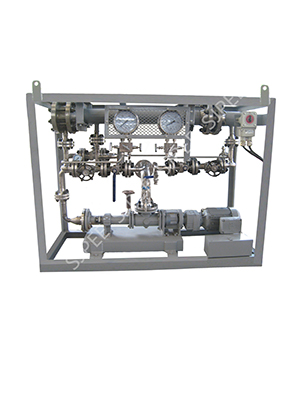
In a significant advancement for the oil and gas sector, a new desanding technology has been introduced to improve the separation process in upstream operations. This innovative desanding solution is designed to optimize the removal of sand and other solid particles from produced fluids, thereby enhancing overall equipment performance and extending the lifespan of downstream machinery.
The company behind this development has a longstanding commitment to advancing separation and filtration technologies tailored specifically to the oil and gas industry’s demanding needs. With a robust R&D focus, the company continuously refines its cyclone separation products and related technologies to meet the evolving challenges faced by operators in the field.
### Tackling the Challenge of Sand Management
Sand production is a common challenge in oil and gas wells, leading to severe operational issues if not properly managed. Accumulated sand can erode equipment, clog pipelines, reduce flow efficiency, and increase maintenance costs. Effective desanding equipment is crucial for safeguarding production infrastructure and maintaining steady output.
By focusing on enhancing cyclone-based separation technology, the new desanding solution provides high-efficiency sand removal while maintaining minimal pressure drop and operational reliability. This technological enhancement represents a meaningful step forward in sand management, reflecting the company’s core expertise and innovation ethos.
### Sophisticated Design for Superior Sand Separation
The newly introduced desanding solution employs advanced cyclone separation principles to improve the sand removal process. The design optimizes fluid dynamics to increase the separation efficiency of solid particles from the produced fluid. By leveraging cutting-edge materials and precision engineering, the equipment maintains robust performance even under harsh downhole conditions.
Key improvements include enhanced vortex stabilization, improved particle settling, and optimized flow paths to minimize turbulence. These enhancements ensure that sand and other solids are effectively separated, preventing their entry into critical downstream equipment such as pumps and valves.
### Integration with Industry Needs
Understanding the operational realities of the oil and gas sector, the company has designed the desanding solution to be easily integrated into existing production systems. It offers flexible configurations that can be tailored to specific well conditions, accommodating varying sand loads and fluid properties.
Additionally, the equipment is engineered for straightforward installation and maintenance, reducing downtime and operational interruptions. These practical considerations demonstrate a user-focused approach, essential for adoption across a range of production environments.
### Advancing Separation Technology Through Continuous Innovation
The company’s history is marked by progressive development in separation equipment, with a special emphasis on cyclone technology. By continuously refining design aspects and exploring new materials, the company has built a reputation for delivering reliable, high-performance separation solutions.
This latest desanding technology is part of an ongoing innovation pipeline aimed at helping operators boost productivity, reduce operational risks, and lower overall costs. The company’s commitment to research and development ensures that their products remain at the forefront of technological advancement in the oil and gas industry.
### Enhancing Operational Efficiency and Sustainability
Effective sand removal not only protects equipment but also contributes to more sustainable production practices. By minimizing erosion and mechanical failures, the desanding solution helps reduce the need for frequent replacements and repairs, thus lowering the environmental impact associated with manufacturing and maintenance activities.
Furthermore, maintaining cleaner production fluids improves downstream processing efficiency and reduces the likelihood of environmental contamination. This aligns with the industry’s broader goals of enhancing operational safety and environmental stewardship.
### Market Impact and Industry Recognition
The introduction of this new desanding technology has observed keen interest from operators seeking reliable, cost-effective sand management solutions. It is expected to become a vital component in the toolkit for upstream production optimization.
Industry specialists commend the company for its focused efforts on refining cyclone separation technologies. The blend of technical sophistication, operational practicality, and continuous improvement underlines the company’s leading role in the market.
### Looking Forward
As the oil and gas industry continues to face complex challenges, including increased production from mature fields and unconventional reservoirs, advanced separation and filtration solutions grow ever more critical. The company’s dedication to innovation and customer-centric design positions it well to support these needs.
Future developments will likely build upon this new desanding technology, integrating smart sensors, automation, and enhanced materials to further improve efficiency and reliability. This forward-thinking approach will help operators navigate the evolving landscape of oil and gas production with confidence.
---
In summary, the launch of this state-of-the-art desanding equipment marks a noteworthy milestone in the company’s journey to advance separation and filtration technologies for the oil and gas industry. By combining technical innovation with practical application, the company continues to deliver solutions that meet the stringent requirements of modern hydrocarbon production, emphasizing reliability, efficiency, and sustainability.