
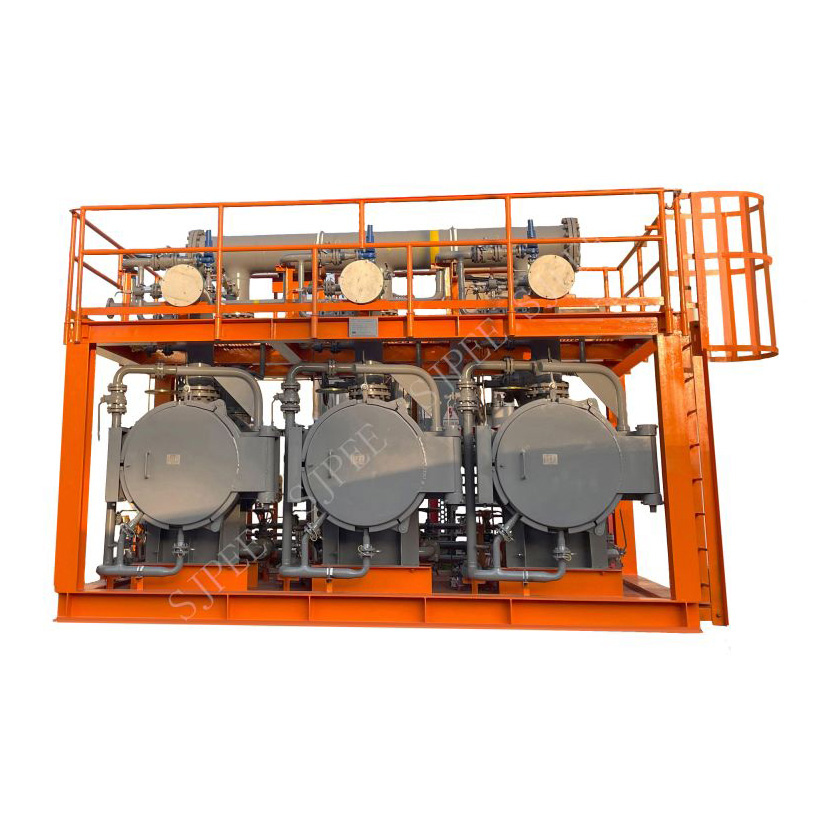
In the rapidly evolving oil and gas industry, the challenge of effectively removing very fine particles from raw materials and process streams has long been a critical concern. These minute contaminants, while often invisible to the naked eye, can significantly impact the quality, safety, and environmental compliance of operations. Recent advancements in separation and filtration technologies are now setting new benchmarks for efficiency and reliability, promising substantial benefits to the sector.
**The Challenge of Very Fine Particles**
Very fine particles, typically measuring less than 10 micrometers in diameter, are ubiquitous in oil and gas processes. They originate from various sources, including drilling fluids, produced water, emissions, and process residues. If not adequately removed, these particles can cause equipment fouling, corrosion, reduced catalyst lifespan, and operational inefficiencies. Moreover, their presence poses environmental risks, contributing to air and water pollution and complicating waste management.
Traditional filtration methods have struggled to address the intricacies of these fine particulates due to limitations in filter media, clogging issues, and inadequate separation efficiency. As a result, the industry has been eager for innovative solutions that combine high performance with durability and cost-effectiveness.
**Commitment to Technological Innovation**
Responding to these challenges, a leading company in the filtration and separation equipment sector has consistently pushed the boundaries of technology development. With a dedicated focus on serving the oil and gas industry, the company has honed its expertise in designing and manufacturing an array of separation equipment tailored to diverse operational needs.
Central to this endeavor is the continuous improvement of cyclone separation products. Cyclone separators leverage centrifugal forces to efficiently separate particles from gas or liquid streams without the use of filter media, reducing maintenance requirements and enhancing operational uptime. The company’s latest cyclone designs incorporate advanced fluid dynamics principles and materials engineering to optimize particle capture rates, even for ultra-fine particulates.
**Breakthroughs in Cyclone Separation Technology**
Over the past few years, significant enhancements have been made to cyclone separator technology. These include:
- **Optimized Geometry:** Refined internal contours and dimensions increase the centrifugal force exerted on particles, thereby improving separation efficiency.
- **Multi-Stage Separation:** Introducing sequential cyclone stages allows gradual removal of particles by size class, ensuring finer particles are trapped in subsequent stages.
- **Durable Materials:** Advanced composites and wear-resistant alloys extend the equipment lifespan under harsh operating conditions.
- **Compact Designs:** Space-saving configurations enable easier integration into existing plants without major infrastructure modifications.
These advancements culminate in separators capable of achieving removal efficiencies exceeding 99% for particles as small as a few micrometers. The result is cleaner process streams, lower emissions, and reduced risk of equipment damage.
**Broader Range of Filtration Solutions**
In addition to cyclone separators, the company offers a comprehensive portfolio of filtration equipment, including cartridge filters, bag filters, membrane units, and gas-liquid separators. Each product undergoes rigorous testing and customization to meet the unique requirements of oil and gas clients, encompassing upstream production, midstream transport, and downstream refining.
By integrating these technologies, operators can implement multilayered purification systems that address broad particle size distributions and varying flow conditions. This holistic approach ensures that critical processes such as gas treatment, hydrocarbon recovery, and effluent management maintain optimal performance.
**Environmental and Economic Benefits**
Efficient removal of very fine particles aligns with the industry’s heightened focus on sustainability and regulatory compliance. Cleaner emissions reduce the environmental footprint, while improved process reliability lowers operational costs linked to downtime and maintenance. Furthermore, enhanced product quality supports better market competitiveness.
Clients adopting these advanced separation solutions have reported measurable improvements, including:
- Extended lifespan of catalysts and equipment by minimizing particulate abrasion and fouling.
- Enhanced recovery rates in separation facilities, translating into higher yield.
- Decreased frequency of filter replacements and related waste generation.
- Compliance with increasingly stringent environmental standards worldwide.
**Looking Ahead**
As the oil and gas sector continues to navigate complex technical and environmental landscapes, ongoing innovation in separation and filtration remains indispensable. The company reaffirms its commitment to research and development, collaborating with industry partners and academic institutions to pioneer next-generation technologies.
Future projects focus on integrating smart monitoring systems and automation into separation equipment, enabling real-time performance tracking and predictive maintenance. Additionally, exploration into novel materials and designs aims to further boost efficiency and reduce lifecycle costs.
**Conclusion**
The effective removal of very fine particles is crucial for the safe, efficient, and responsible operation of oil and gas facilities. Through dedicated technological advancement, particularly in cyclone separation products, the company provides cutting-edge solutions that address this challenge head-on. These innovations not only optimize operational outcomes but also contribute meaningfully to environmental stewardship, underscoring the vital role of advanced filtration technologies in the energy sector’s sustainable future.