
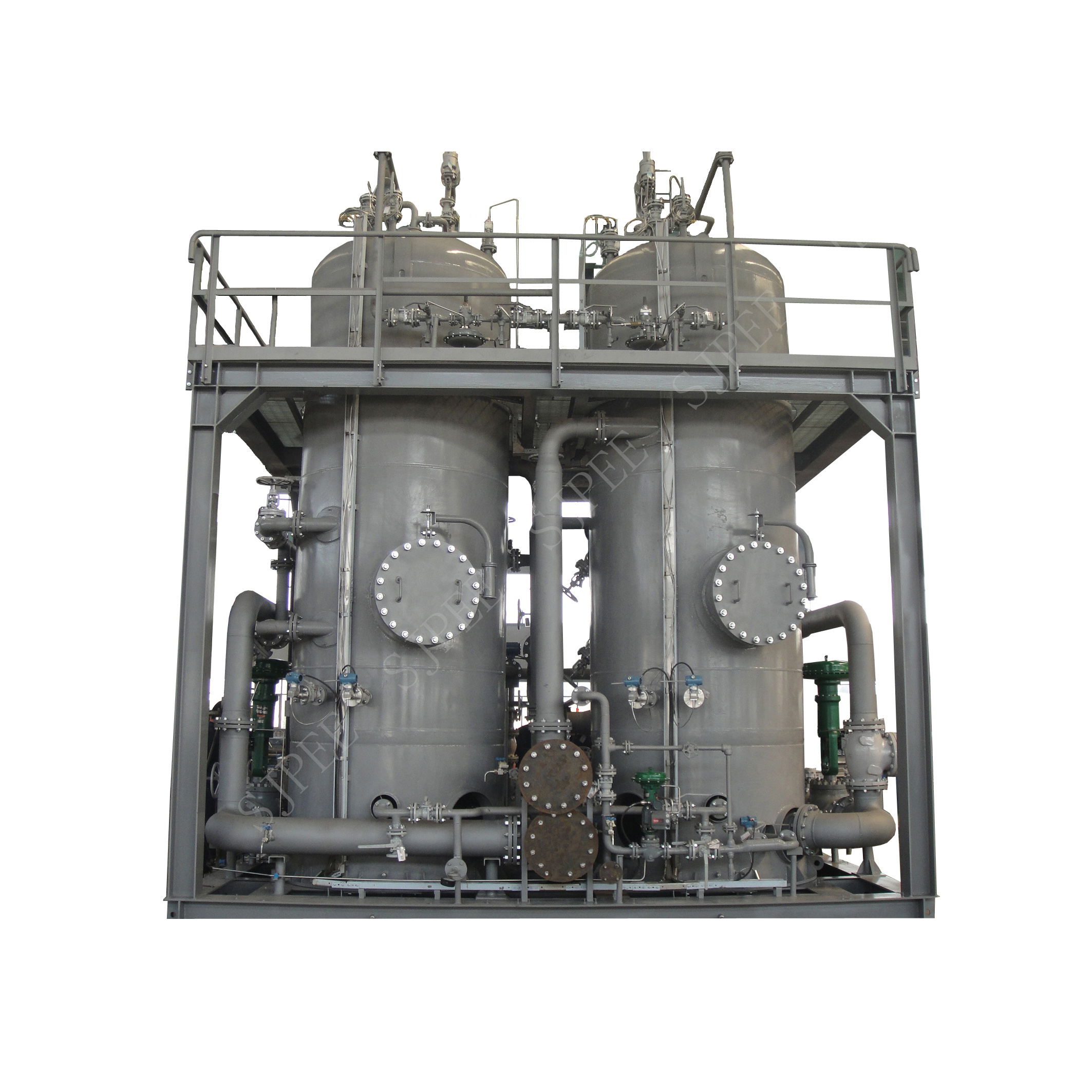
In the continuous pursuit of advancing separation and filtration technologies critical to the oil and gas sector, a leading company renowned for its dedication to innovation has introduced a cutting-edge mechanical sludge dewatering solution. This new technology promises to significantly improve operational efficiency, reduce environmental impact, and optimize resource recovery within the industry.
### Commitment to Technological Excellence in Separation Equipment
The company, with a long-standing commitment to developing a broad spectrum of separation and filtration equipment, has focused extensively on meeting the ever-evolving demands of the oil and gas industry. Their expertise lies in designing robust, reliable, and efficient equipment that addresses key challenges such as handling complex emulsions, separating solids from liquids, and improving overall process stream quality.
A cornerstone of their technical development strategy has been the continuous refinement of cyclone separation products and related technologies. Cyclone separators are indispensable in the industry for their ability to separate oil, gas, and water phases quickly and effectively. Building on this foundation, the company has engineered a new mechanical sludge dewatering system that integrates seamlessly with existing infrastructure and delivers superior performance.
### Addressing Sludge Management Challenges
Sludge management has long been a pressing issue for oil and gas operations worldwide. Sludge, comprising water, hydrocarbons, and solid waste material, accumulates in various stages of oil production and processing. Improper handling can lead to high disposal costs, environmental contamination, and operational downtime.
Traditional sludge treatment methods often involve chemical additives, lengthy drying times, or expensive incineration procedures. These solutions, while sometimes effective, can be inefficient, costly, and environmentally taxing.
The newly introduced mechanical sludge dewatering technology promises to revolutionize this area by mechanically separating water from sludge with high precision and minimal chemical use. The system employs advanced centrifugal force principles, enhanced by proprietary design improvements, to efficiently extract water content and reduce the volume of sludge requiring disposal.
### Key Features and Benefits of the Mechanical Sludge Dewatering Technology
- **High Efficiency:** The system achieves up to 50% more moisture removal compared to conventional dewatering methods, drastically lowering sludge volume and disposal costs.
- **Environmentally Friendly Operation:** By minimizing the need for chemical additives and reducing sludge volume, the technology supports sustainable environmental practices and regulatory compliance.
- **Robust and Reliable Design:** Engineered to withstand harsh operating conditions typical in oil and gas facilities, the equipment features corrosion-resistant materials and optimized mechanical components for long service life.
- **Ease of Integration and Operation:** The modular design allows for straightforward installation in new or existing sites without major process disruptions. User-friendly interfaces and automated controls simplify operation and maintenance.
- **Cost Savings:** Reduced sludge volume translates to lower transportation and disposal expenses, while improved water recovery can help reclaim resources and improve overall process economics.
### Enhancing Cyclone Separation with Integrated Dewatering Solutions
The company’s expertise in cyclone separation has directly informed the development of the new dewatering system. Cyclone separators efficiently divide fluid phases based on density differences, but residual sludge with high moisture content can still pose challenges for waste handling.
By integrating mechanical sludge dewatering technology downstream of cyclone separators, operators can achieve a more complete separation cycle — from initial phase separation to final waste volume reduction — in a streamlined, efficient process.
This integrated approach not only maximizes the recovery of valuable hydrocarbons and process water but also minimizes environmental footprints by reducing solid waste generation and the associated risks of contamination.
### Real-World Applications and Industry Impact
The mechanical sludge dewatering technology is suitable for a wide range of oil and gas operations, including upstream production sites, midstream processing facilities, and downstream refineries. Its adaptability makes it an ideal solution for managing sludge generated from drilling, production, tank cleaning, wastewater treatment, and refinery sludge handling.
Early adopters have reported marked improvements in sludge handling times and reductions in disposal costs. Operational uptime has increased due to streamlined maintenance associated with drier, less sticky sludge residues. Moreover, enhanced compliance with environmental regulations has helped these operators maintain their social license to operate in sensitive regions.
### Future Outlook and Innovation Roadmap
The company remains dedicated to pushing the boundaries of separation technology through research and development. Future enhancements planned for the mechanical sludge dewatering system include advanced sensor integration for real-time sludge condition monitoring, adaptive control algorithms to optimize dewatering under varying sludge compositions, and exploration of energy recovery possibilities from separated water streams.
Additionally, ongoing improvements to cyclone separation technologies will feed into the system’s expanded capabilities, ensuring customers benefit from an end-to-end solution with unmatched performance and reliability.
### Conclusion
The launch of the mechanical sludge dewatering technology marks a significant milestone in the company’s mission to deliver innovative, high-performance separation equipment tailored to the complex needs of the oil and gas industry. By combining proven cyclone separation expertise with state-of-the-art mechanical dewatering, the company offers operators a powerful tool to enhance operational efficiency, reduce environmental impact, and achieve sustainable growth.
As the global oil and gas landscape evolves, technologies like these will play an increasingly vital role in addressing operational challenges and meeting stringent environmental standards, ensuring the industry’s resilience and competitiveness well into the future.