
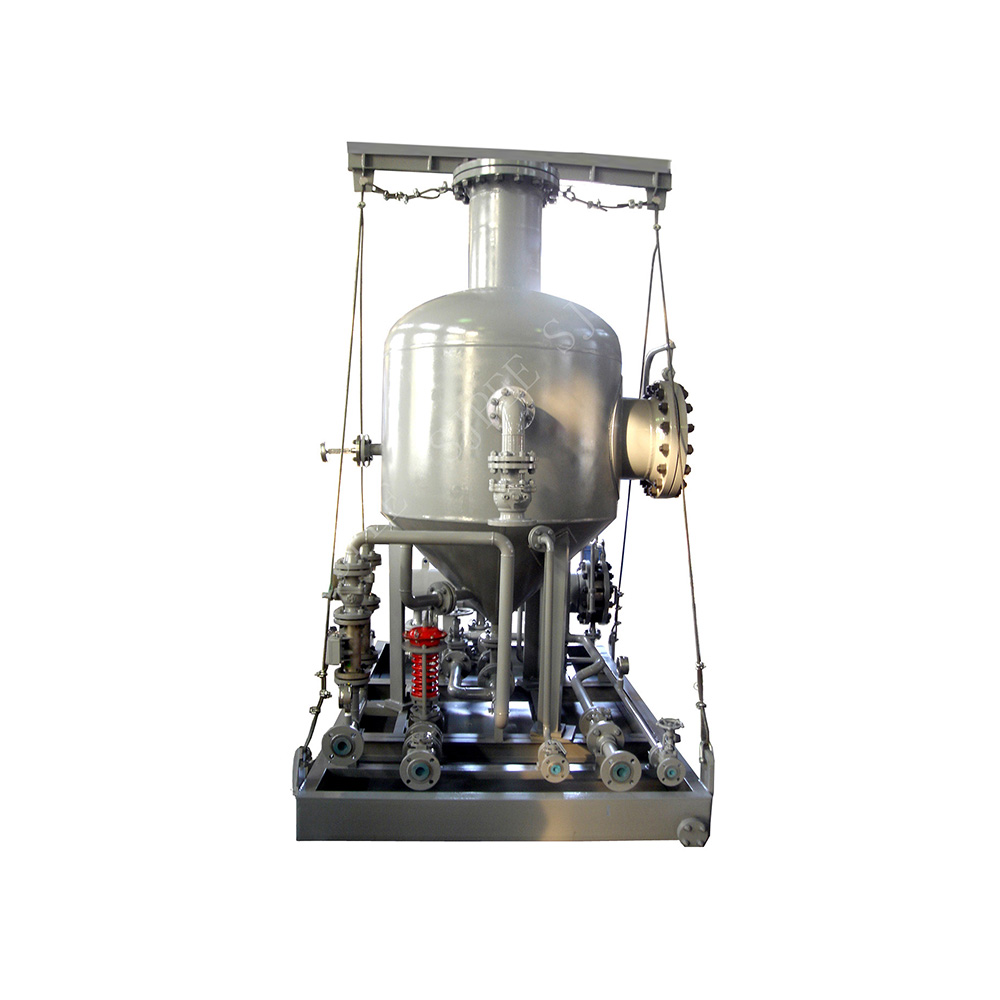
In the swiftly evolving oil and gas sector, efficient separation and filtration technologies play a critical role in ensuring operational excellence and environmental compliance. One of the most effective techniques currently gaining traction is Induced Gas Flotation (IGF), a method that significantly improves the separation of oil, gas, and water mixtures. Complementing this, advancements in cyclone separation technologies continue to elevate the standards of equipment performance across the industry.
This article explores the application of Induced Gas Flotation combined with cutting-edge cyclone separation products, highlighting a company’s ongoing commitment to developing state-of-the-art solutions designed to meet the rigorous demands of the oil and gas industry.
### Understanding Induced Gas Flotation: Revolutionizing Separation Processes
Induced Gas Flotation is a water treatment and separation process that removes dispersed oil, solids, and other contaminants from wastewater by introducing gas bubbles. These bubbles attach to suspended particles and cause them to rise to the surface where they form a froth layer that can be mechanically skimmed off.
In the oil and gas industry, IGF is particularly effective because it can rapidly and efficiently separate micro-sized oil droplets and suspended solids from produced water. This is crucial for meeting environmental regulations and for the reuse or safe discharge of treated water. The process involves the controlled injection of gas, typically air or nitrogen, to generate microbubbles inside a flotation tank or vessel. The fine bubbles increase the surface area for particle attachment, which enhances the separation efficiency.
The implementation of IGF leads to several benefits: improved water clarity, reduced chemical consumption, lower operational costs, and the ability to treat crude production wastewater to meet stringent discharge standards. It is adaptable to a range of flow rates and contaminant concentrations, making it a versatile solution for different upstream and downstream processes.
### Cyclone Separation: Complementing Flotation with High-Performance Solid-Liquid-Gas Separation
While IGF efficiently deals with dispersed oil and suspended solids, cyclone separation technologies provide a crucial front-line defense in handling bulk phase separations. Cyclone separators utilize centrifugal force to separate particles or droplets from a fluid stream. As the fluid enters tangentially into the cylindrical or conical body of the separator, it spirals at high speeds, causing denser solids or droplets to move outward and collect inside the cyclone walls where they can be removed.
In oil and gas operations, cyclones are essential for gas-liquid and liquid-liquid separation, enabling the removal of sand, scale, and other solid contaminants before further processing. Their compact design offers space-saving advantages and low maintenance requirements compared to other separation methods.
Recent technical advancements have focused on optimizing cyclone geometry, materials, and operational parameters to increase efficiency and durability. Enhanced modeling and computational fluid dynamics (CFD) simulations have played a pivotal role in designing cyclones that maximize separation performance under a variety of operating conditions.
### A Company Leading the Charge in Separation Equipment Innovation
At the forefront of these technological advances is a company dedicated to developing various separation and filtration equipment tailored to the demanding oil and gas industry environment. Their technical team continually pioneers improvements and innovations in cyclone separation products and related technologies to meet evolving market needs.
The company’s approach combines deep industry experience with rigorous research and development efforts. By leveraging advanced materials, precision manufacturing, and sophisticated design tools, they produce separators and filters that deliver not only high performance but also operational reliability and longevity.
Their commitment extends beyond product design to encompass comprehensive customer support, installation assistance, and ongoing maintenance services. This holistic offering ensures that clients can maximize the benefits of state-of-the-art separation technology with minimal downtime and optimal efficiency.
### Integrated Separation Solutions for Enhanced Operational Efficiency
The synergy of Induced Gas Flotation and advanced cyclone separation offers an integrated solution that addresses multiple separation challenges faced by oil and gas producers. Cyclone separators efficiently remove coarse solids and bulk phases early in the process, protecting downstream equipment and reducing the load on flotation units.
Following this, IGF units effectively polish the produced water, removing fine dispersed oils and suspended solids, producing water that complies with strict environmental standards or is suitable for reuse in the field. This multi-stage approach optimizes overall plant performance, reduces chemical and energy consumption, and minimizes environmental impact.
### Industry Implications and Future Outlook
As environmental regulations become increasingly stringent worldwide, the demand for reliable and efficient separation solutions will continue to grow. Innovations such as Induced Gas Flotation combined with advanced cyclone separation technology represent a proactive strategy for oil and gas companies seeking to enhance sustainability and operational effectiveness.
Moreover, digitalization and automation trends are beginning to influence separation technologies. Integration of sensors, real-time monitoring, and intelligent control systems allow operators to maximize efficiency and rapidly respond to changing process conditions.
The company’s ongoing investment in research and product development positions it well to capitalize on these trends and deliver solutions that address current challenges while anticipating future needs.
### Conclusion
The oil and gas industry's success relies heavily on effective separation and filtration technologies. Induced Gas Flotation stands out as a powerful technique for removing micro-sized contaminants from produced water, while cyclone separation remains indispensable for bulk phase and solid-liquid-gas separations.
Through dedicated innovation in cyclone separation products and a comprehensive approach to equipment development, the company exemplifies how technical expertise and customer focus can drive meaningful progress. Together, these technologies form the backbone of advanced separation processes that promote environmental stewardship, enhance operational efficiency, and support the sustainable growth of the oil and gas sector.
As the industry moves forward, embracing integrated and advanced separation technologies will be key to unlocking new levels of efficiency and environmental compliance, securing a cleaner and more productive future for oil and gas operations worldwide.