
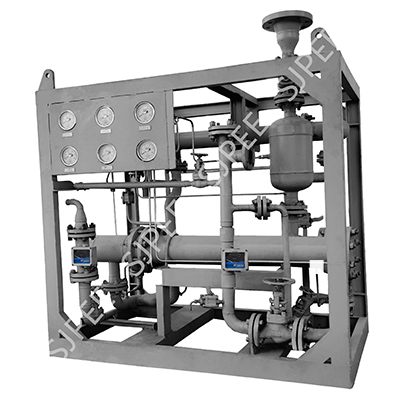
In recent years, the oil and gas industry has witnessed significant advancements in separation technologies, driven by the increasing demand for more efficient, reliable, and cost-effective equipment. One of the critical components in this sector is the sand separator, essential for protecting downstream equipment and ensuring optimal production performance. Among various types of sand separation devices, the hydrocyclone sand separator stands out due to its simplicity, efficiency, and adaptability to various operational conditions. As market requirements evolve, the pricing and technological aspects of hydrocyclone sand separators draw considerable attention from industry stakeholders.
### Understanding Hydrocyclone Sand Separators
A hydrocyclone sand separator is a mechanical device that utilizes centrifugal force to separate sand and other solid particles from fluid streams. The mixture typically enters tangentially into a conical vessel, creating a vortex that forces heavier particles to the outer walls, from where they are collected and removed. Meanwhile, the cleaned fluid exits through the top orifice. This process is crucial in oil and gas production to prevent abrasion, erosion, and operational downtime caused by sand deposition in pipelines, pumps, and other equipment.
### Market Dynamics: Hydrocyclone Sand Separator Price Trends
The cost of hydrocyclone sand separators has been influenced by multiple factors, including raw material prices, technological improvements, manufacturing scale, and after-sales service offerings. As operators seek to balance capital expenditure with operational efficiency, competitive pricing without compromising product quality and performance becomes paramount.
Recent trends indicate a moderate decline in prices attributed to enhanced manufacturing processes and increased competition among suppliers. However, this price decrease does not signify lower quality; rather, it reflects optimized production techniques and economies of scale that benefit end-users. The affordability of advanced hydrocyclone sand separators enables wider adoption, particularly in small to medium-sized operations previously constrained by budget limitations.
### Company Commitment to Technological Advancement
In this evolving landscape, companies dedicated to delivering reliable separation solutions have played a pivotal role. One such company has consistently prioritized the development of various separation and filtration equipment tailored to the unique needs of the oil and gas industry. Their technical teams focus heavily on the continuous innovation and enhancement of cyclone separation products and technologies.
This commitment involves extensive research and development efforts aimed at improving the efficiency, lifespan, and adaptability of hydrocyclone sand separators. Innovations include optimizing the internal geometry for enhanced centrifugal force generation, utilizing wear-resistant materials to extend equipment life, and integrating smart monitoring systems for real-time performance assessment.
### Technical Innovation Driving Efficiency
Recent engineering breakthroughs have introduced several notable improvements to hydrocyclone sand separators. Computational fluid dynamics (CFD) modeling enables precise simulation of fluid flow and particle separation efficiency, guiding the design of more effective separators. Such advancements contribute to increased removal rates of sand and fine particles, reducing the likelihood of equipment abrasion and pipeline clogging.
Material science developments have led to the use of advanced composites and alloys that resist corrosion and erosion even under harsh operational conditions. This durability translates to lower maintenance costs and less frequent replacement cycles, directly impacting the total cost of ownership positively.
Additionally, modular design concepts allow for easier customization and scalability, adapting to different processing volumes and sand content levels. The integration of sensor technology further enhances operation by providing instant feedback on separator performance, facilitating proactive maintenance and minimizing downtime.
### Impact on Oil and Gas Operations
The adoption of state-of-the-art hydrocyclone sand separators significantly enhances operational reliability in oil and gas extraction and processing. Efficient sand separation reduces wear on critical equipment, minimizes unexpected shutdowns, and improves overall production uptime. Enhanced sand removal also means better product quality, as impurities are effectively managed before further processing stages.
Moreover, by offering these high-performance sand separators at competitive pricing, companies enable operators of varying scales to implement robust sand management strategies without excessive financial burden. This democratization of advanced separation technology supports broader industry goals of sustainability and operational excellence.
### Looking Forward: Industry Outlook and Opportunities
As global energy demands evolve and exploration moves into more challenging environments, the importance of dependable sand separation technology will only grow. Ongoing investment in research and development promises continuous refinement of hydrocyclone sand separators, incorporating digitalization, automation, and environmentally friendly design principles.
Companies dedicated to advancing cyclone separation technology are well-positioned to lead this transformation by delivering equipment that meets stringent performance standards while remaining cost-effective. The synergy of technological innovation and strategic pricing will drive widespread adoption, ultimately contributing to safer, cleaner, and more profitable oil and gas operations worldwide.
### Conclusion
Hydrocyclone sand separators remain a cornerstone technology within the oil and gas sector, addressing critical challenges associated with sand contamination. Recent trends in pricing, coupled with a strong focus on technological development by industry-leading companies, underscore the growing accessibility and performance of these devices.
Through continuous improvement of cyclone separation products, companies not only meet but exceed industry demands, ensuring operators can confidently manage sand-related risks. As a result, hydrocyclone sand separators will continue to play an essential role in enhancing operational efficiency, protecting valuable assets, and supporting sustainable production in the oil and gas industry for years to come.