
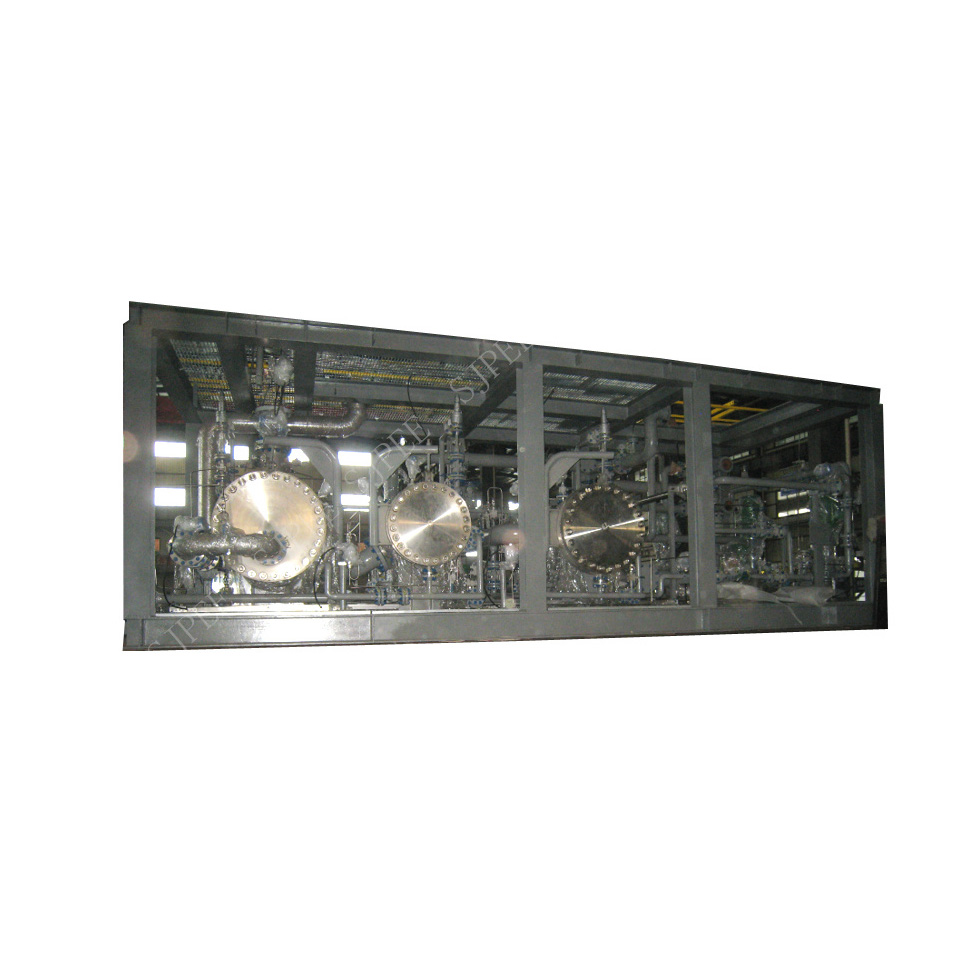
In the ever-evolving landscape of the oil and gas industry, efficient separation and filtration technologies remain pivotal for optimizing production processes and ensuring environmental compliance. A leading company, dedicated to addressing these critical needs, has recently unveiled significant advancements in cyclone separator technology—underscoring its commitment to developing high-performance separation equipment tailored for the sector.
### Commitment to Industry-Specific Separation Solutions
For years, the company has distinguished itself by focusing on the development of advanced separation and filtration equipment tailored specifically for oil and gas applications. Its dedication spans a comprehensive portfolio of products designed to meet the rigorous demands of upstream and downstream operations.
Recognizing that reliable separation processes are integral to maximizing hydrocarbon recovery and refining efficiency, the company has continually prioritized research and innovation in cyclone separation technologies. These devices play a crucial role in separating solids, liquids, and gases efficiently within production and processing facilities, enabling enhanced operational safety, reduced downtime, and improved environmental compliance.
### Technological Advancements in Cyclone Separation Products
Cyclone separators operate on a simple but highly effective principle: leveraging centrifugal forces to separate particles from fluid streams without moving parts. This method minimizes maintenance requirements and enhances reliability in harsh operating environments. In recent years, however, the need for more precise separation at higher flow rates, greater energy efficiency, and adaptability to diverse operational contexts has driven new technological developments.
The company’s latest cyclone separators embody these advancements through refined design parameters, such as optimized vortex finder geometry, improved inlet and outlet configurations, and the use of novel materials resistant to corrosion and erosion. This results in enhanced separation efficiency, reduced pressure drops, and extended service life—factors critically important for the demanding conditions typical in oil and gas production.
One notable innovation includes an adaptive flow technology integrated into the cyclone design that enables real-time adjustment according to varying feed conditions. This allows the separator to maintain peak performance amidst fluctuations in fluid composition, temperature, and pressure—a common challenge in upstream oil recovery operations. Furthermore, the company has incorporated digital monitoring systems that provide operators with real-time data on separator performance, enabling predictive maintenance and minimizing unexpected downtime.
### Impact on Oil and Gas Operations
The practical benefits of these upgraded cyclone separators have been demonstrated through multiple field applications across different regions. Operators have reported marked improvements in the separation of drilling mud solids, produced water treatment, and gas-solid separation stages. Enhanced separation efficiency contributes directly to improved product quality and reduces downstream processing burdens.
Moreover, the robust construction and low-maintenance design reduce operational costs significantly. For remote and offshore installations where maintenance logistics can be particularly challenging and expensive, the reliability of these cyclone separators translates into substantial cost savings and operational continuity.
Environmental performance is another critical dimension where these advancements deliver tangible benefits. Effective separation minimizes the release of contaminants into the environment and reduces the volume of waste generated, thereby supporting industry efforts to meet increasingly stringent environmental regulations.
### Industry Recognition and Future Outlook
The company’s proactive approach to continuous development and technical innovation in cyclone separation technology has garnered positive recognition within the oil and gas sector. Collaborative projects with industry partners and research institutions have helped validate the performance of new designs and expand their applicability.
Looking ahead, the company plans to further enhance its product line by integrating artificial intelligence and machine learning algorithms with sensor data. This next-generation smart separation technology aims to optimize operational parameters dynamically, further improving efficiency and responsiveness.
Additionally, research is underway to adapt cyclone separators for emerging challenges, such as handling complex multi-phase flows in unconventional reservoirs and supporting carbon capture and storage (CCS) initiatives.
### Conclusion
As the oil and gas industry navigates a future shaped by technological innovation and environmental responsibility, advanced separation equipment such as cyclone separators remain essential tools. The company’s unwavering commitment to research, development, and technical improvement ensures it remains at the forefront of providing tailored, high-performance solutions to meet the evolving challenges of oil and gas production.
Through these efforts, the company not only supports its clients in enhancing operational efficiency and safety but also contributes to broader sustainability and environmental goals—a crucial alignment as the industry advances into a new era of energy development.