
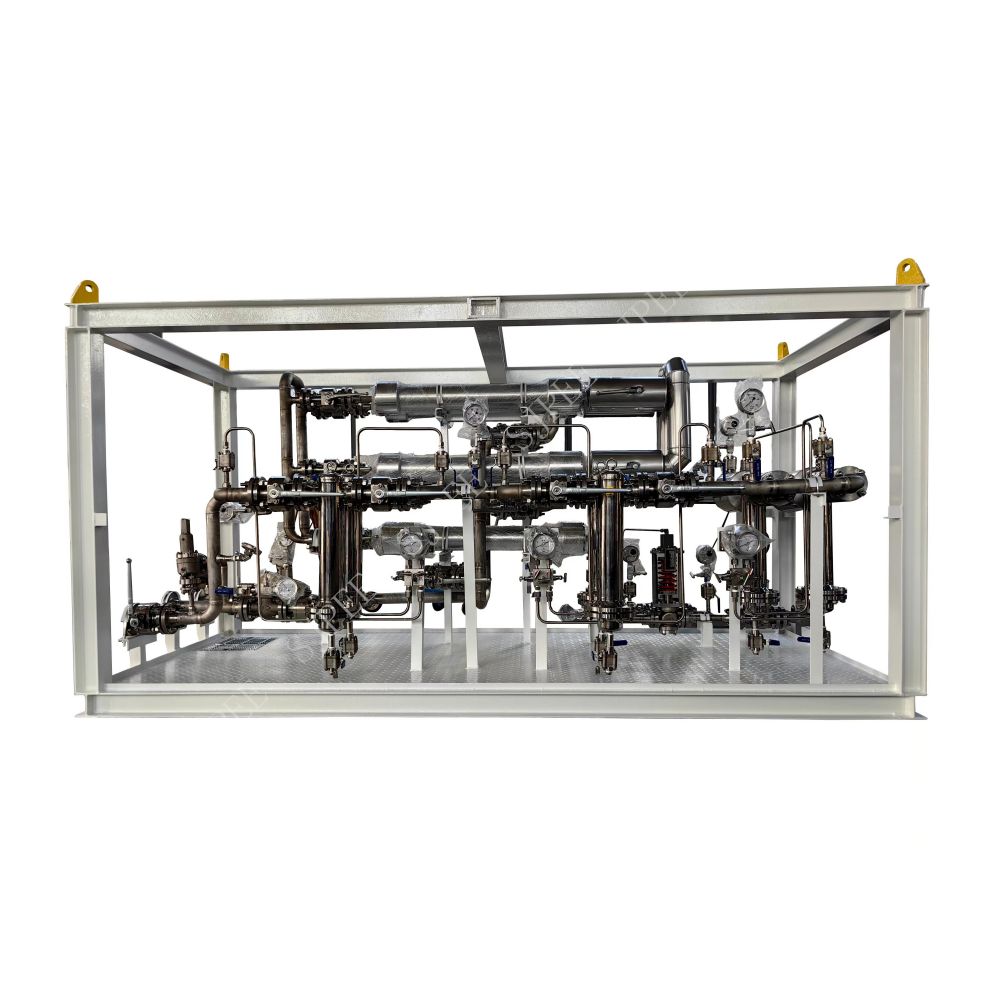
In the continuous pursuit of advanced separation solutions, a new laboratory hydrocyclone is making significant strides in improving the efficiency and effectiveness of separation processes critical to the oil and gas industry. Developed with cutting-edge technology, this laboratory hydrocyclone exemplifies the company’s unwavering commitment to advancing separation and filtration equipment tailored to the specific needs of the energy sector.
### Advancing Separation Technology for Oil and Gas
Separation equipment plays a pivotal role in the oil and gas industry, ensuring that fluids are efficiently separated to maximize recovery and maintain operational integrity. Among these technologies, hydrocyclones stand out due to their ability to separate particles and fluids based on density differences without the use of moving parts, making them both reliable and cost-effective.
The newly developed laboratory hydrocyclone is designed specifically to support research, testing, and optimization of separation processes on a smaller scale before full industrial implementation. By simulating real operational conditions in a controlled lab environment, this tool enables engineers and researchers to make data-driven decisions that lead to improved large-scale system designs.
### Company Commitment to Innovation and Quality
This breakthrough reflects the company’s long-standing dedication to innovation in separation and filtration technologies. With decades of experience serving the oil and gas industry, the company has consistently delivered high-quality, reliable equipment that addresses the evolving challenges of upstream, midstream, and downstream operations.
“Our mission has always been to develop and improve cyclone separation products and technologies to meet the rigorous demands of the oil and gas sector,” said a company spokesperson. “The laboratory hydrocyclone is a significant step forward, giving our clients a robust tool that aids in optimizing separation efficiency and thus, overall process performance.”
### Technical Advantages of the Laboratory Hydrocyclone
The laboratory hydrocyclone integrates the latest design improvements and material technologies to provide superior separation performance. Key features include:
- **Optimized Geometry:** The cyclone’s shape and dimensions are engineered to enhance the centrifugal force applied to the fluid mixture, improving the separation of solids and liquids with different densities.
- **High Precision Testing:** Designed for laboratory use, the equipment allows precise control over flow rates, pressures, and feed compositions. This precision helps researchers replicate various field conditions and study performance under varying scenarios.
- **Durable Materials:** Constructed from corrosion-resistant alloys, the hydrocyclone withstands harsh testing environments and extended use, ensuring reliable results across multiple experiments.
- **Modular Design:** The system supports quick adjustments to vortex finder sizes and cone angles, enabling a wide range of testing conditions for fine-tuning separation parameters.
### Applications and Industry Impact
Laboratory hydrocyclones are essential tools for R&D in oil recovery, water treatment, and fluid purification, where understanding the separation mechanisms at a small scale can translate into significant operational improvements.
In oil and gas, hydrocyclones are widely used to remove drill cuttings, treat produced water, and separate oil from water emulsions. The new laboratory hydrocyclone facilitates:
- **Process Optimization:** By testing various feed compositions and operating conditions, engineers can optimize field-scale hydrocyclone designs, reducing downtime and maintenance.
- **Enhanced Recovery:** Improved separation enhances hydrocarbon recovery and minimizes loss, directly impacting profitability.
- **Environmental Compliance:** Better separation technology helps companies meet stringent environmental regulations on waste disposal and pollutant discharge.
- **Cost Reduction:** Laboratory testing reduces the need for costly field trials and prevents premature equipment failure.
### Supporting Sustainable Industry Growth
As the oil and gas sector faces increasing pressures to operate sustainably, continued innovation in separation technology becomes paramount. Efficient separation not only improves resource utilization but also helps reduce environmental footprints by minimizing waste and chemical usage.
The company’s development of this laboratory hydrocyclone aligns with global efforts to drive sustainability through technology. By enabling more precise control and understanding of separation processes, the equipment aids in designing systems that are both efficient and environmentally responsible.
### Looking Ahead
Building on this successful innovation, the company plans to further enhance cyclone separation technologies by integrating digital monitoring and automation capabilities. Future iterations of the laboratory hydrocyclone may include sensors and data acquisition systems that provide real-time insights, further accelerating research and development cycles.
Continued collaboration with industry partners and academic institutions will also ensure that upcoming products address emerging challenges, such as unconventional resource extraction and wastewater management.
### Conclusion
The introduction of the laboratory hydrocyclone marks a significant milestone in the company’s journey of technological advancement in separation equipment for the oil and gas industry. Through relentless innovation and a deep understanding of industry needs, the company not only reinforces its leadership position but also supports operational excellence and sustainable growth in one of the world’s most vital sectors.
With cutting-edge tools like this laboratory hydrocyclone, the path toward more efficient, cost-effective, and environmentally friendly oil and gas operations becomes clearer, promising a brighter future for both industry stakeholders and the global community.