
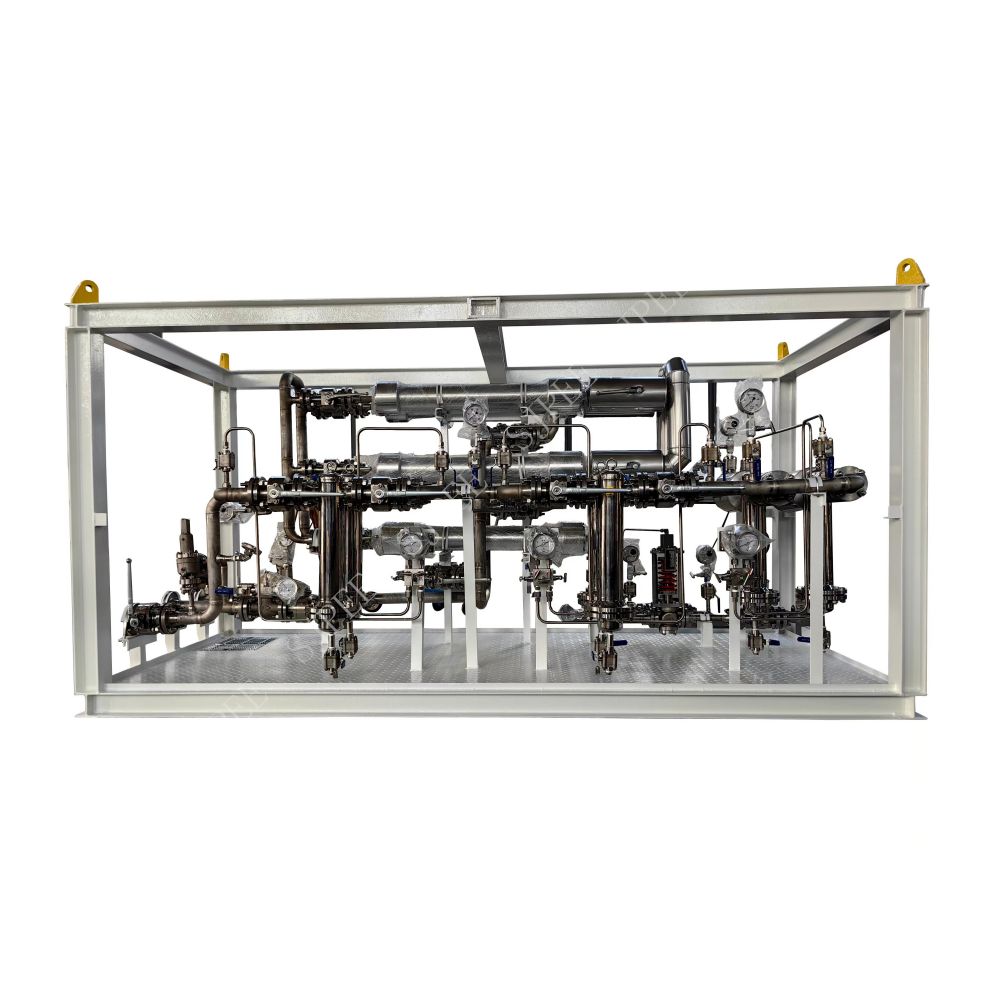
In a significant stride for the oil and gas sector, recent developments in hydrocyclone technology are set to enhance separation efficiency, operational reliability, and overall environmental performance. The latest advancements reflect a continuing commitment by industry leaders to develop and refine critical equipment that meets the growing demands of modern energy production and processing.
Hydrocyclones play an essential role in the oil and gas industry, serving as vital separation devices used to separate solid particles from liquid mixtures. Their design enables the efficient removal of contaminants, which ensures the protection of downstream equipment and improves the quality of produced fluids. The need for robust and highly efficient separation systems has never been greater, as operators strive to maximize recovery, minimize environmental impact, and reduce operational costs.
Key to this progress is the company’s ongoing dedication to developing various separation and filtration equipment tailored to the oil and gas industry’s stringent requirements. With a primary focus on advancing cyclone separation design and technology, the company has made notable improvements in hydrocyclone performance by optimizing flow patterns, enhancing wear resistance, and integrating smarter control systems.
At the heart of the recently unveiled hydrocyclone innovations is improved separation efficiency. By fine-tuning the internal geometry, including the vortex finder and cone angle, the upgraded design facilitates a more precise centrifugal force distribution. This enhancement allows for better classification and segregation of particles based on size and density, significantly increasing solids removal rates while maintaining fluid throughput.
Moreover, the company’s hydrocyclones now boast advanced wear-resistant materials that extend service life in harsh operating environments. Given the abrasive nature of the solid particulates encountered in oilfield fluids, durability is paramount. Incorporating high-performance composites and novel lining materials reduces maintenance frequency and downtime, translating into cost savings for operators.
Another leap forward is the integration of intelligent monitoring and control capabilities. By embedding sensors that track parameters such as pressure drop, flow rate, and particle concentration, these hydrocyclones can now provide real-time data feedback. Such information enables operators to optimize process conditions dynamically, anticipate maintenance needs, and ensure consistent separation performance throughout the production cycle.
These technical enhancements align with the company’s overarching mission: to continuously develop and improve cyclone separation products and technologies that meet evolving industry challenges. Their expertise extends beyond hydrocyclones to a broader range of separation and filtration equipment used in upstream, midstream, and downstream applications. This holistic approach allows for the delivery of comprehensive solutions that address issues related to fluid cleanliness, phase separation, and solids handling.
The impact of these developments is already evident across multiple oil and gas operations. Improved hydrocyclone performance contributes to higher efficiency in produced water treatment, thus enabling operators to meet increasingly stringent environmental regulations. By effectively removing solids and contaminants from produced fluids, facilities can reduce the risk of equipment corrosion, scaling, and fouling, thereby extending asset life and improving operational reliability.
Furthermore, the enhanced separation efficiency aids in maximizing hydrocarbon recovery. Cleaner fluids allow for better performance of downstream separation and processing units, such as separators, dehydrators, and compressors. This results in higher-quality oil and gas output and improved overall process economics.
Industry experts also highlight the sustainability benefits associated with advanced hydrocyclone technology. As operators seek to reduce waste and minimize the environmental footprint of their activities, efficient solids removal and water treatment are critical components. By enabling better recycling and reuse of produced water and reducing the volume of hazardous waste, the upgraded equipment supports greener operational practices.
Looking ahead, the company remains steadfast in its commitment to innovation, with ongoing research and development focused on further refining hydrocyclone designs. Future enhancements are expected to incorporate artificial intelligence and machine learning algorithms to enhance predictive maintenance and process optimization. Additionally, developments in materials science promise even greater durability and resistance to challenging substances encountered in increasingly diverse hydrocarbon reservoirs.
In summary, the latest advances in hydrocyclone technology mark a pivotal development for the oil and gas industry. Through the continuous drive to improve separation equipment and filtration solutions, the company is helping operators overcome operational challenges, meet regulatory demands, and achieve sustainable production goals. As the energy sector continues to evolve, such technological innovations will play a fundamental role in ensuring reliable, efficient, and environmentally responsible operations across the globe.