
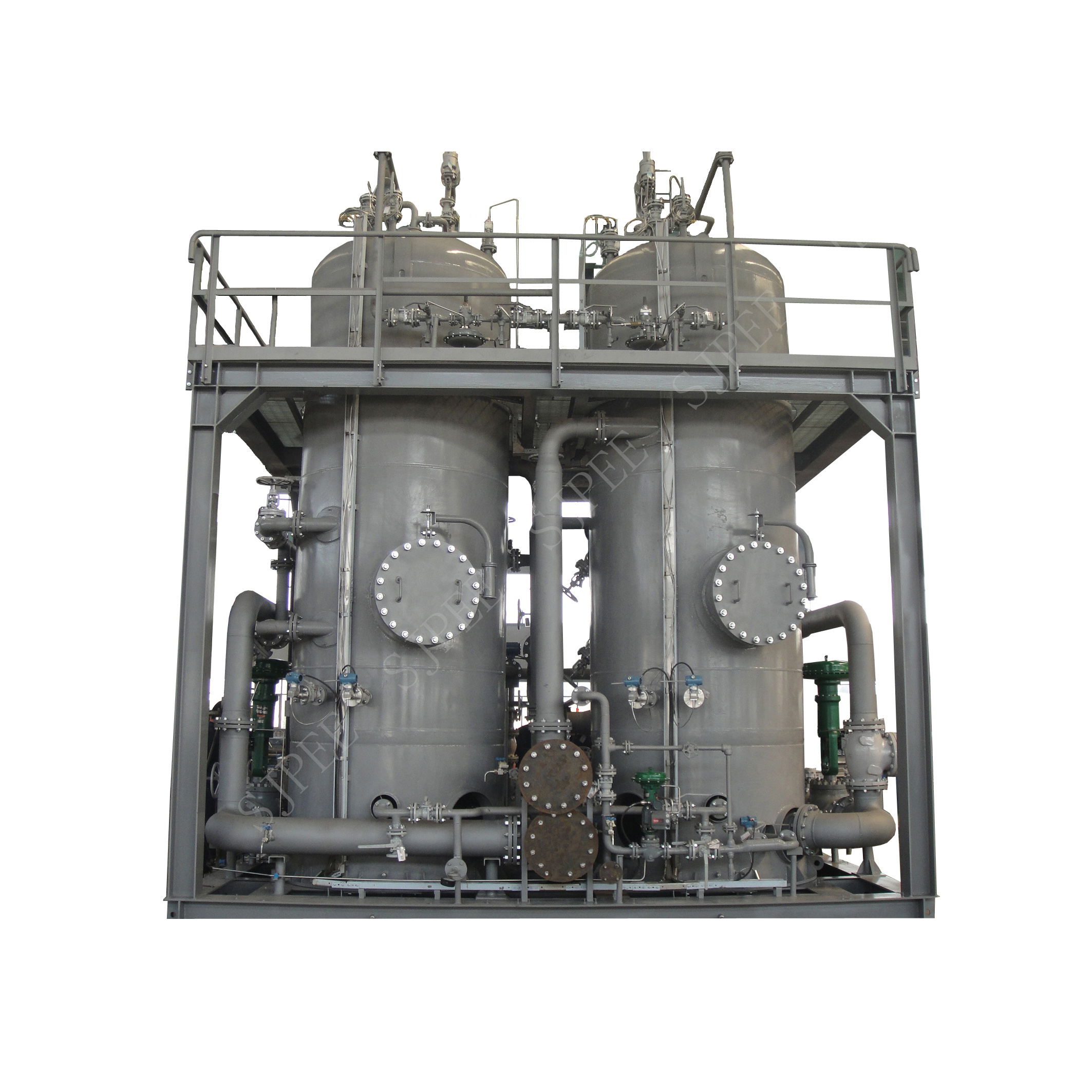
The oil and gas industry continuously seeks advanced technologies to optimize production processes and ensure operational efficiency. One such critical technology is the desanding hydrocyclone, a device designed to remove sand and other solid particles from drilling fluids, produced water, and other process streams. Recently, a leading company, renowned for its dedication to developing cutting-edge separation and filtration equipment in the oil and gas sector, has introduced an enhanced desanding hydrocyclone that promises to set new standards for performance and reliability.
### Commitment to Technological Advancement
The company has established itself as a pioneer in separation technology with a clear commitment to innovation. Over the years, it has developed a wide range of separation and filtration equipment tailored to meet the demanding requirements of the oil and gas industry. Recognizing the growing need for efficient sand removal solutions, the company has focused substantial technical resources on advancing cyclone separation products and related technologies.
This ongoing development emphasizes not only improving existing equipment but also integrating state-of-the-art design principles and materials science to increase durability, reduce maintenance, and optimize separation efficiency. The company’s engineering teams work closely with industry experts and clients worldwide, ensuring that their products align perfectly with evolving operational needs.
### Role of Desanding Hydrocyclones in Oil and Gas Operations
In oil and gas operations, sand production from reservoirs during drilling and extraction can cause considerable wear and tear on equipment, obstruct pipelines, and reduce production efficiency. Removing sand particles early in the process is therefore critical to protecting expensive machinery and maintaining smooth operations.
The desanding hydrocyclone is a widely used mechanical device that leverages centrifugal forces to separate sand and other solid impurities from fluids. The fluid enters the hydrocyclone tangentially, creating a vortex inside the conical chamber. Due to density differences, sand particles are driven toward the wall and downward into the underflow outlet, while cleaner liquid exits through the overflow outlet.
Hydrocyclones offer several advantages: no moving parts, compact design, high throughput capacity, and effective separation of fine particles, all of which contribute to lower operational costs and higher system reliability.
### Features of the New Desanding Hydrocyclone
Building on its experience and commitment to continuous improvement, the company’s newly developed desanding hydrocyclone introduces several key enhancements aimed at improving sand removal efficiency and operational durability:
- **Optimized Internal Geometry:** By refining the shape and dimensions of the cyclone’s inlet, vortex finder, and apex, the device achieves a more stable vortex and better separation performance. This optimization reduces particle re-entrainment and loss of valuable hydrocarbons.
- **Advanced Wear-Resistant Materials:** Recognizing that abrasive sand particles often lead to equipment erosion, the new hydrocyclone employs specially selected wear-resistant liners and coatings. These materials significantly extend the lifecycle of the equipment, reducing downtime and maintenance costs.
- **Modular Design:** The hydrocyclone system features a modular structure that allows for easy installation, inspection, and replacement of components. This design facilitates field servicing and customization based on specific operational conditions and capacity requirements.
- **Enhanced Capacity and Scalability:** Designed to handle varying flow rates, the system is scalable to accommodate small-scale well sites as well as large upstream processing plants. This flexibility ensures that operators can optimize sand removal regardless of throughput.
### Industry Impact and Client Benefits
The introduction of this next-generation desanding hydrocyclone is poised to deliver tangible benefits to oil and gas operators:
- **Improved Process Efficiency:** Enhanced sand removal protects downstream equipment such as pumps, separators, and pipelines, minimizing unplanned shutdowns and repair costs.
- **Increased Equipment Longevity:** The use of advanced materials and smart design translates into longer operational life for separation units, delivering better return on investment.
- **Reduced Environmental Risks:** Efficient sand separation also means that produced water and other effluents released to the environment have fewer solid contaminants, supporting industry efforts toward greener operations.
- **Simplified Maintenance:** The modular design lowers maintenance complexity and cost, allowing operations teams to focus on core production activities.
### Continuous Innovation for Future Challenges
The company’s philosophy underscores a commitment to ongoing research and development. In addition to the desanding hydrocyclone, it actively explores new technologies and materials to meet emerging challenges such as processing more complex fluids, handling higher solids concentrations, and integrating smart monitoring systems.
Regular collaborations with research institutes and participation in industry forums allow the company to stay at the forefront of separation technology trends. Customer feedback further drives iterative product improvements, ensuring that the technology evolves alongside the needs of the oil and gas sector.
### Conclusion
The innovative desanding hydrocyclone introduced by the company exemplifies how targeted technological advancement can significantly impact the efficiency and sustainability of oil and gas operations. By focusing on the core challenge of sand removal through improved design and materials innovation, the company delivers solutions that enhance operational reliability and reduce costs.
As the oil and gas landscape continues to evolve with new production challenges and environmental considerations, the company remains dedicated to pushing the boundaries of separation and filtration technology, reinforcing its position as a trusted partner to the industry worldwide. With solutions like the advanced desanding hydrocyclone, operators are better equipped to navigate the complexities of modern hydrocarbon production.