
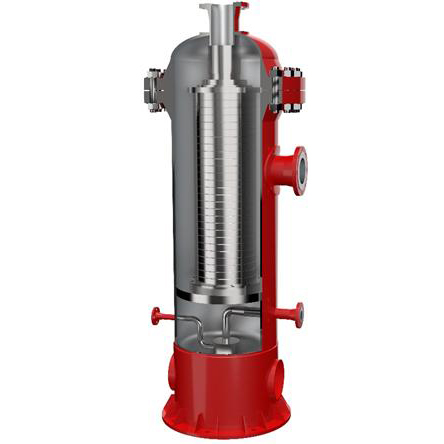
The oil and gas industry continually faces challenges associated with efficient fluid processing and separation, critical for maximizing resource recovery and protecting downstream equipment. In response to these industry demands, advancements in surface dewatering technologies are making significant strides, providing enhanced separation capabilities and operational efficiencies.
A leading company in the sector, renowned for its dedication to developing a wide range of separation and filtration equipment tailored to the oil and gas industry, has recently emphasized its commitment to innovating surface dewatering solutions. With a strong technical focus, the company has continuously developed and improved cyclone separation products and technologies, which form the cornerstone of their approach to enhanced fluid processing.
**The Importance of Surface Dewatering in Oil and Gas Operations**
Surface dewatering, the process of removing free and emulsified water from produced fluids, plays a crucial role in oil and gas production. Effective dewatering not only ensures that the produced hydrocarbon streams meet pipeline and sales specifications but also prevents corrosion and fouling in processing equipment. Additionally, water management is vital for reducing transportation costs and environmental impact.
Traditional dewatering methods have often faced limitations in handling varying fluid compositions, flow rates, and the presence of solids. Recent technological advancements in separation equipment offer promising solutions to these challenges by improving the efficiency and reliability of water removal from oil streams at the surface facilities.
**Advancements in Separation Equipment and Cyclone Technologies**
The company’s longstanding expertise lies in the development of separation and filtration equipment tailored for the unique conditions of the oil and gas industry. Among these, cyclone separation technology has emerged as a highly effective method for fluid separation due to its ability to utilize centrifugal forces to efficiently separate multiphase streams into their individual components.
Cyclone separators offer several advantages including compact design, high processing capacity, and minimal maintenance requirements. The company’s continuous innovation in cyclone technology has led to improvements in design that optimize separation efficiency under varying operating conditions. Enhancements include vortex finder geometry optimization, improved inlet designs, and materials selection to increase durability and resistance to corrosion and wear.
These technical advances have made cyclone separators particularly effective for surface dewatering applications, providing operators with reliable means to reduce water content in produced hydrocarbons before further processing or transportation.
**Integrating Advanced Surface Dewatering Solutions into Oil and Gas Facilities**
Incorporating state-of-the-art surface dewatering equipment into oil and gas production facilities offers multiple operational benefits. The advanced separation technologies enable operators to handle complex fluid mixtures with varying water cuts and solid content, ensuring consistent product quality.
Moreover, the improved dewatering performance helps extend the lifespan of downstream equipment by reducing the risk of corrosion and scaling, which are often caused by residual water and emulsified phases. This translates into reduced maintenance costs, enhanced operational uptime, and increased overall profitability.
In addition, better water removal reduces the volume of water that must be treated or reinjected, lowering environmental liabilities and compliance costs. By aligning with environmental regulations and corporate sustainability goals, oil and gas companies can leverage these technologies to demonstrate responsible resource management.
**Commitment to Continuous Development and Industry Collaboration**
The company’s dedication to continuous improvement is underscored by ongoing research and development efforts aimed at refining cyclone separation products and exploring new filtration techniques. Collaboration with industry stakeholders including operators, engineers, and research institutions supports the practical deployment of innovative solutions that address emerging challenges in fluid separation.
Training and technical support form an integral part of the company’s approach, ensuring that clients maximize the benefits of the latest technologies in surface dewatering and filtration. By combining cutting-edge product development with customer-centric service, the company remains at the forefront of separation technology in the oil and gas sector.
**Looking Ahead: The Future of Surface Dewatering Technologies**
As the oil and gas industry evolves amidst fluctuating market conditions and increasing environmental scrutiny, advanced surface dewatering solutions will continue to play a pivotal role in operational efficiency and sustainability. Innovations in cyclone technology and filtration systems are expected to integrate with digital monitoring and automation platforms, enabling real-time process optimization and predictive maintenance.
The company’s strategic focus on technical excellence and responsive product development positions it well to meet future industry needs. By harnessing the power of advanced separation technologies, oil and gas operators can achieve superior fluid management, reduce environmental impact, and improve economic outcomes.
**Conclusion**
The ongoing development of surface dewatering technologies represents a critical advancement for the oil and gas industry, addressing long-standing challenges in fluid separation and water handling. Through dedication to innovation in cyclone separation products and filtration equipment, the company exemplifies the proactive approach needed to drive industry progress.
As the sector seeks to optimize production processes and align with sustainability objectives, surface dewatering solutions will remain central to enhancing operational performance and environmental stewardship. Continued collaboration and technological evolution promise to unlock further efficiencies, ensuring that produced fluids meet quality standards while minimizing costs and ecological footprint.