
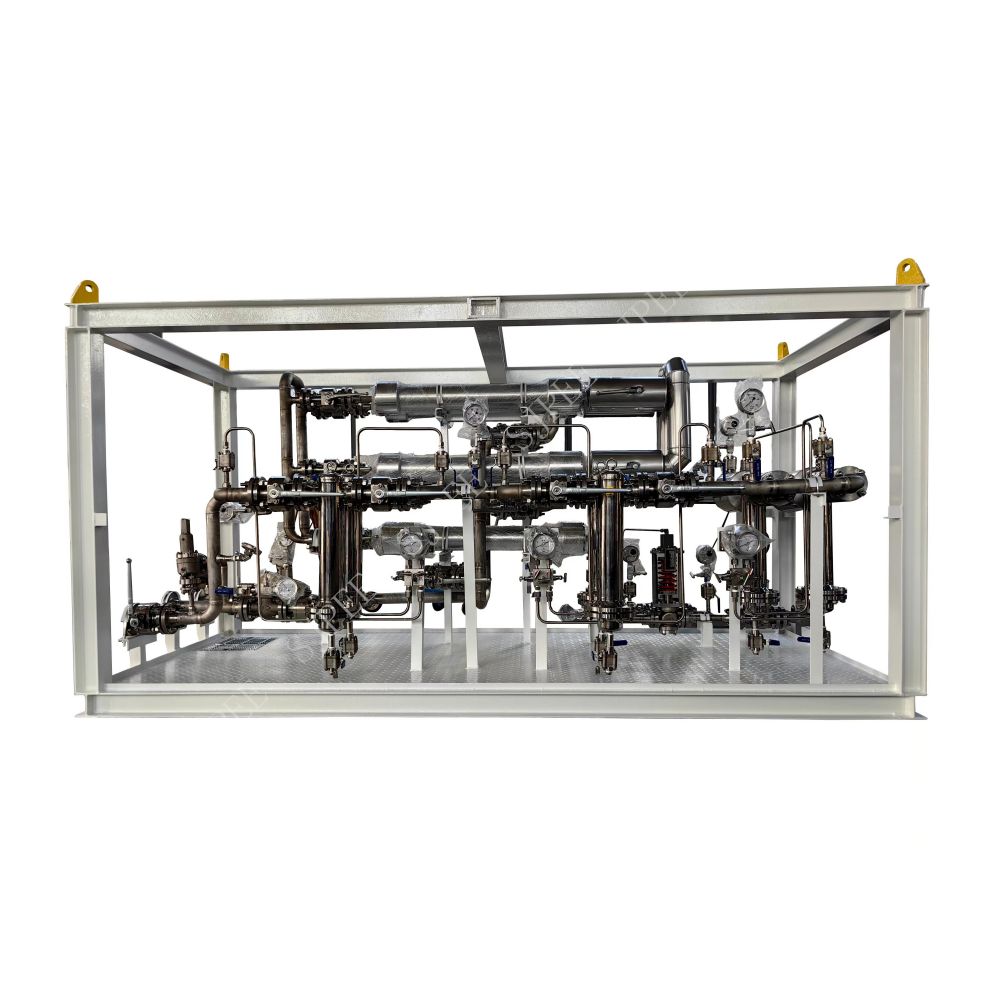
In the ever-evolving oil and gas industry, the demand for advanced separation and filtration equipment remains critical to ensuring operational efficiency and environmental compliance. Addressing these needs, a pioneering company dedicated to the development of cutting-edge separation and filtration solutions has taken significant strides in improving equipment performance, particularly through advancements in cyclone separation technologies.
The company’s continuous commitment to innovation has positioned it at the forefront of the industry, offering a wide range of separation equipment designed to tackle complex challenges in oil and gas extraction, processing, and waste management. Among these challenges are the effective removal and separation of various solid particulates, including coarse sand and fine sand, which can affect both operational efficiency and equipment longevity.
### Tackling the Challenges of Sand Separation
The presence of sand in oil and gas production is a common and persistent issue. Sand ingress can cause abrasion and wear on equipment, leading to costly downtime and maintenance, as well as potential safety hazards. The efficient and reliable separation of both coarse and fine sand from production streams has thus become a fundamental requirement to maintain smooth operations.
Inspired by this industry need, the company has placed special emphasis on refining its separation technologies to address the unique characteristics of diverse particulate matter. This includes the optimization of cyclone separators, which utilize centrifugal forces to separate solids from liquids and gases. Cyclone separators are renowned for their robustness and efficiency, but continuous improvements are essential to meet increasingly stringent operational demands.
### Advancements in Cyclone Separation Technologies
Cyclone separation equipment has long been utilized for its ability to handle high volumes of particulate-laden fluids while minimizing pressure drops and maintenance requirements. The company’s research and development teams have been focusing on enhancing key aspects of cyclone separators, such as separation efficiency, throughput capacity, and durability under harsh conditions.
Recent developments have seen modifications in the internal geometry of cyclone units to improve the separation of fine particles, which are traditionally more challenging to extract due to their small size and low weight. By refining vortex dynamics and optimizing flow paths, the company has been able to increase the capture rate of fine sand without compromising the handling of coarse particulates.
Moreover, material innovations have been introduced to extend equipment life and resistance to abrasive wear. The introduction of wear-resistant linings and coatings has significantly reduced downtime related to maintenance, providing operators with more reliable and cost-effective solutions.
### Comprehensive Solutions for Oil and Gas Industry Needs
Beyond cyclone separators, the company’s portfolio includes various filtration equipment and separation devices tailored for different stages of oil and gas processing. These solutions are designed to manage not only sand but also other impurities such as oil-water emulsions, solids, and other contaminants.
The integration of advanced separation technologies into oil and gas operations contributes to enhanced environmental compliance by reducing the release of harmful particulates and emulsions into the environment. Additionally, improved separation efficiency leads to better resource recovery and lower operational costs.
### Commitment to Continuous Innovation
Driven by a mission to support the oil and gas industry with reliable and innovative equipment, the company sustains a rigorous approach to research and development. Partnerships with industry stakeholders, ongoing field testing, and feedback integration ensure that solutions are practical, adaptable, and aligned with future trends and regulations.
By investing in technology development and applying scientific insights into fluid dynamics and materials engineering, the company strives to set new performance standards in separation equipment. This commitment not only benefits end-users but also promotes sustainable practices across the industry.
### Industry Impact and Future Outlook
The advances in separation and filtration equipment have garnered attention from major operators seeking to optimize production while minimizing risks associated with sand intrusion and particulate contamination. The company’s solutions exemplify how engineering innovation directly supports operational excellence and environmental stewardship.
Looking forward, ongoing enhancements in automation, monitoring, and smart technology integration are anticipated to further elevate the capabilities of separation equipment. Real-time performance monitoring and predictive maintenance are among the promising developments that will empower operators with greater control and insight.
### Conclusion
The challenges posed by coarse and fine sand in oil and gas production underscore the essential role of effective separation technologies. Through persistent innovation and dedication to quality, the company has established itself as a key partner for operators needing advanced separation and filtration equipment.
By refining cyclone separation products and continuously enhancing their performance, the company not only addresses present needs but also pioneers future-ready solutions that contribute to a safer, more efficient, and environmentally responsible oil and gas industry.
---
*This article highlights the company’s dedication to advancing separation technologies, emphasizing their role in managing coarse and fine sands within oil and gas operations, thereby supporting operational efficiency and sustainability.*