
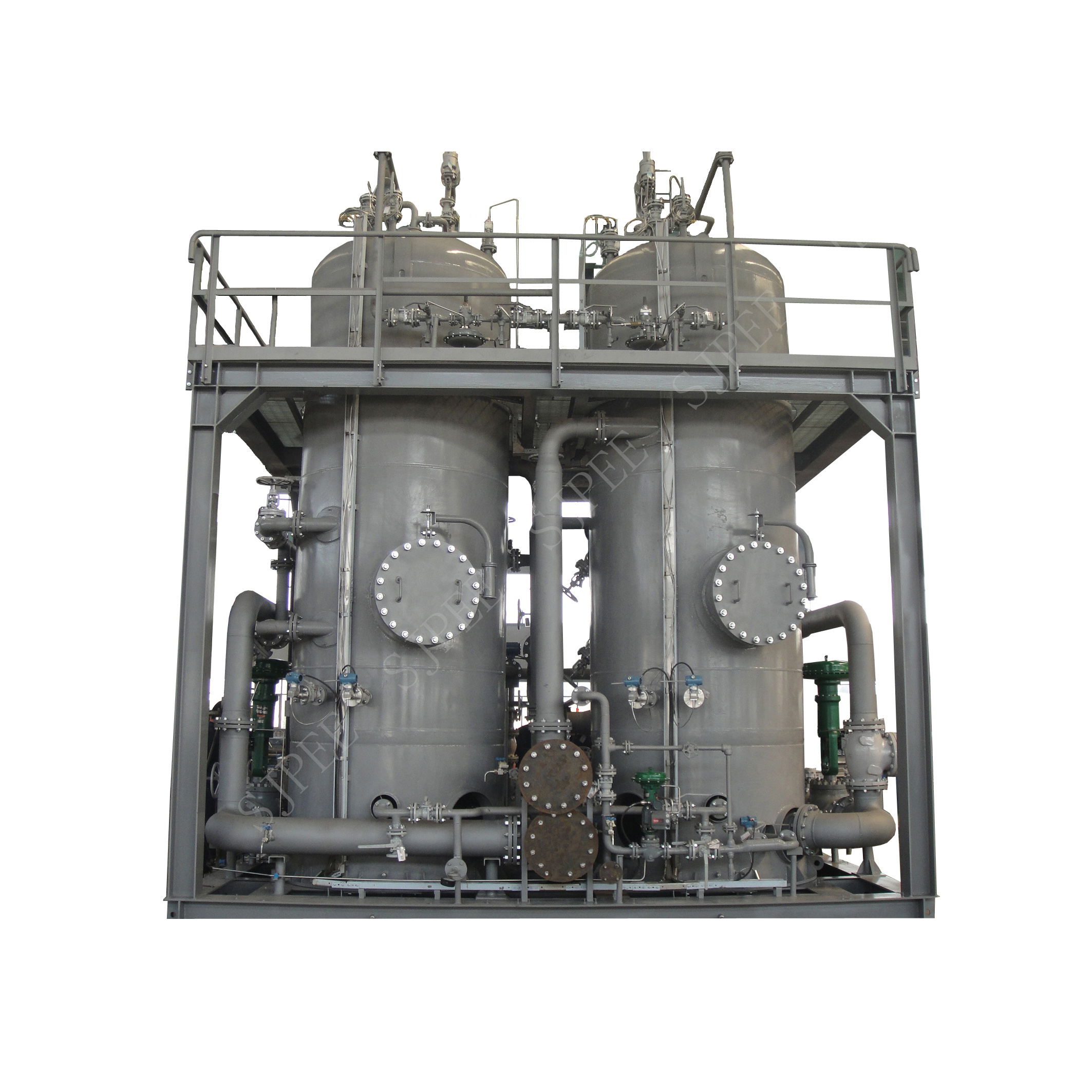
In the ever-evolving oil and gas industry, efficient separation technology remains a critical factor for optimizing production and ensuring environmental compliance. Recently, a leading company renowned for its commitment to developing advanced separation and filtration equipment has made significant strides in four-phase separation technology. This innovation promises to enhance operational efficiency, reduce downtime, and provide economic benefits across upstream and midstream processes.
**Commitment to Excellence in Separation Solutions**
The company behind this breakthrough has long been dedicated to supplying the oil and gas sector with cutting-edge separation equipment. Its core mission centers around the continuous development and refinement of cyclone separation products and various filtration solutions tailored to address the industry's unique challenges. By leveraging advanced engineering and fluid dynamics principles, the company aims to meet the growing demand for versatile, reliable, and efficient separation systems capable of handling complex multiphase mixtures.
**Understanding Four-Phase Separation**
In conventional oil and gas processing, separation typically involves isolating three phases: oil, water, and gas. However, modern extraction and production techniques often yield more complex mixtures that include solids and other contaminants such as sand, scale, and chemical additives. This necessitates an advanced approach—four-phase separation—that can effectively segregate gas, oil, water, and solids simultaneously.
The introduction of robust four-phase separation technology helps operators address issues such as equipment wear, flow assurance, and environmental management by ensuring the timely removal of solids and reducing corrosion risks caused by water and particulates. This is particularly critical in high-volume production settings where operational uptime directly influences profitability.
**Technological Innovations Driving Performance**
The pioneering four-phase separation system integrates an advanced design of cyclone technology, which leverages centrifugal forces to separate components based on density differences. This results in faster separation times and improved purity of the individual phases compared to traditional gravitational separators.
Key technological improvements include:
- **Enhanced Cyclone Design:** Optimized geometry reduces turbulence and enhances phase disengagement. This allows for efficient solids settling while maintaining steady oil and gas flows.
- **Modular Construction:** The equipment is designed for easy installation and maintenance, minimizing downtime during operational cycles and facilitating scalability to accommodate various production volumes.
- **Advanced Materials:** Utilization of corrosion-resistant and wear-resistant materials extends equipment lifespan, especially important when processing fluids with abrasive solids.
- **Integrated Control Systems:** Automated monitoring and control ensure consistent separation efficiency under varying flow conditions, reducing manual intervention and the potential for human error.
**Benefits to the Oil and Gas Industry**
The implementation of this four-phase separation technology offers multiple advantages:
1. **Operational Efficiency:** By effectively removing solids and separating phases simultaneously, downstream equipment such as pumps, valves, and pipelines experience less wear and reduced clogging. This translates to lower maintenance costs and fewer unscheduled shutdowns.
2. **Environmental Compliance:** Enhanced separation improves the quality of discharge streams, aligning with stringent environmental regulations concerning wastewater and gas emissions.
3. **Economic Gains:** Improved separation performance leads to higher recovery rates of valuable hydrocarbons and reduced chemical consumption, boosting overall profitability.
4. **Versatility:** Capable of handling varying feed compositions, the technology provides operators with a flexible tool adaptable to different field conditions, including offshore platforms and onshore processing facilities.
**Industry Reception and Future Prospects**
The oil and gas sector has responded positively to the new four-phase separation solutions, with early adopters reporting measurable improvements in production throughput and equipment reliability. Industry experts emphasize that as conventional reservoirs mature and unconventional resources play a larger role, the demand for sophisticated separation technologies capable of handling complex fluid mixtures will only increase.
Looking ahead, the company continues to invest in research and development, focusing on next-generation cyclone designs and filtration technologies. Emphasis is placed on integrating digital twin simulations and AI-enabled diagnostics to optimize separator performance in real time.
**Conclusion**
The advancement of four-phase separation technology marks a significant milestone in the oil and gas industry's ongoing quest for operational excellence. Through innovative engineering, persistent refinement, and a deep understanding of field requirements, the company is setting new standards for multiphase fluid treatment. As the industry faces mounting technical and environmental challenges, such breakthrough solutions will play an indispensable role in driving sustainable and profitable energy production well into the future.